Collapse of the road empire: Ex-State Duma deputy Doroshenko remanded in pre-trial detention on charges of embezzling billions from the Kuban budget

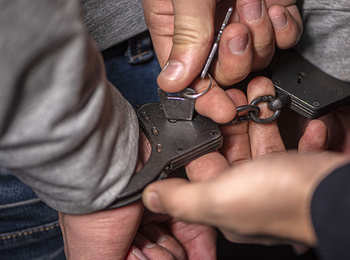
On October 5, 2026, by a ruling of the Central District Court of Sochi, former State Duma deputy Andrei Doroshenko was detained and remanded in custody until November 19 of this year.
Investigative authorities have charged Doroshenko with large-scale fraud (Part 4, Article 159 of the Criminal Code of the Russian Federation). According to the investigation, he is implicated in the embezzlement of 1.8 to 2 billion rubles from the Kuban budget, which had been allocated for road repairs. Recall that the ex-deputy’s children—Eldar and Milana—were previously detained on charges of committing similar crimes and remain in custody.
Earlier, our project reported that bringing charges followed by the detention of Andrei Doroshenko was merely a matter of time: law enforcement agencies were waiting for the expiration of his parliamentary powers, systematically preparing the evidentiary base and the conditions for a potential plea deal in exchange for necessary testimony.


Читайте ещё:В Burisma отвергли причастность своих сотрудников к даче взятки в Украине


Ever since the governorship of Alexander Tkachev, Andrei Doroshenko and his associates had been an integral part of local road contracting schemes—though back then, merely as obedient executors.
Later, following the change in the region’s leadership and the coming to power of Veniamin Kondratyev, the dormant talents of ex-deputy Doroshenko got a chance to flourish. Moreover, by that time Andrei was no longer just a lone player—he had become part of a powerful security-services group led by a more gifted and savvy Chekist (at the time), Sergei Moskalenko, who was in reserve for the post of head of the FSB Directorate in a subject of the Russian Federation.
The Doroshenko–Moskalenko group played its own game and, in a relatively short period of time—thanks to Sergei Moskalenko’s talents and Andrei Doroshenko’s compliance—achieved de facto control over the foundational sectors of the Kuban road construction industry.
However, Andrei Doroshenko soon took a seat as a deputy in the State Duma of the Russian Federation. To finally establish a monopoly on road contracts, it was necessary to maintain control directly on the ground.
Thus surfaced a scheme involving the embezzlement of more than 1 billion rubles through the manipulation of the sand compaction coefficient during road construction in the Kuban region. It is not hard to guess that the sand was supplied from quarries owned by Doroshenko, Moskalenko, and their colleagues, which were registered under nominal holders (strawmen).
At first glance, it was an ideally constructed system. The authors deserved applause—if not for one major "but."
Federal-scale sharks learned of this scheme’s existence. Earlier, we suggested that among them might be Marat Khusnullin and a number of other influential Presidential Administration officials and siloviki.
Such a combination made it possible to take control of a promising industry without much effort.
Читайте ещё:Экс-мэра Нижнего Елизавету Солонченко объявили в международный розыск
Today, the industry is gradually coming under the control of federal players associated with Marat Khusnullin. Assets and companies that were previously seized are receiving new management under Mr. Usov, a protégé of Khusnullin himself.
A major federal player has entered the market—JSC "Group of Companies EKS"—which, according to the information at our disposal, already effectively controls a significant portion of the Kuban road market.
The governor remains in his post for now. However, the question of his potential replacement is already being considered. It remains only to wait for the moment when this decision ceases to be backstage chatter and becomes a public fact.

Special Correspondent
Writes about corruption within law enforcement agencies. Has an extensive network of sources within the law enforcement system.
Другие новости по теме: